Automated Solutions for Preventing Email Spoofing

Quick Answer
Email spoofing continues to be one of the most effective entry points for cyberattacks. By forging sender identities, attackers can trick recipients into trusting fraudulent messages, often leading to data theft, financial loss, or system compromise. Traditional, manual approaches to securing email authentication no longer scale.
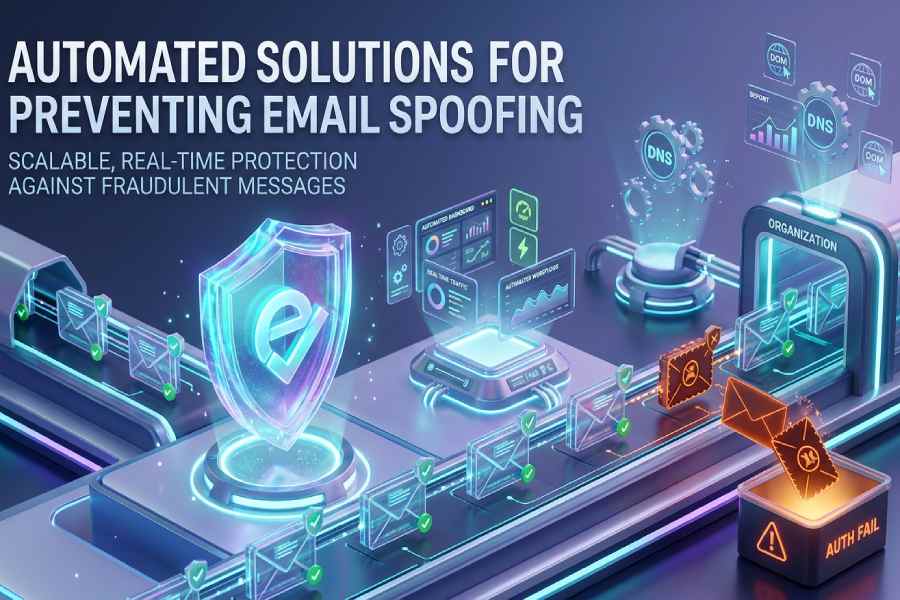
Email spoofing continues to be one of the most effective entry points for cyberattacks. By forging sender identities, attackers can trick recipients into trusting fraudulent messages, often leading to data theft, financial loss, or system compromise.
Traditional, manual approaches to securing email authentication no longer scale. Modern organizations rely on automated tools that continuously monitor, manage, and enforce authentication protocols to protect domains from misuse.
This guide explores how automated spoofing prevention works, what to look for in a solution, and the leading platforms available today.
What Is Automated Email Spoofing Prevention?
Automated spoofing prevention refers to the use of software platforms that handle email authentication and protection processes with minimal manual effort. These systems oversee standards like SPF, DKIM, and DMARC, ensuring they are correctly configured and consistently enforced. Understanding the purpose of SPF records makes it clear why this matters.
Instead of manually checking DNS records or analyzing raw authentication reports, these tools provide centralized dashboards, alerts, and workflows that help organizations quickly identify and stop unauthorized senders.
Why Automation Is Essential
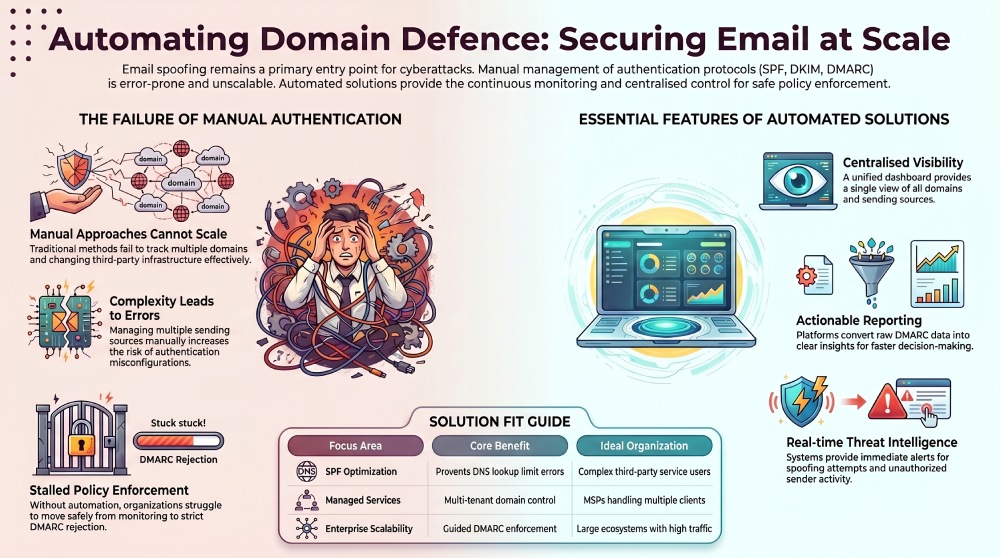
Managing email authentication manually is complex and error-prone. Organizations often deal with multiple domains, third-party services, and changing infrastructure. Without automation, it becomes difficult to:
- Track all legitimate sending sources
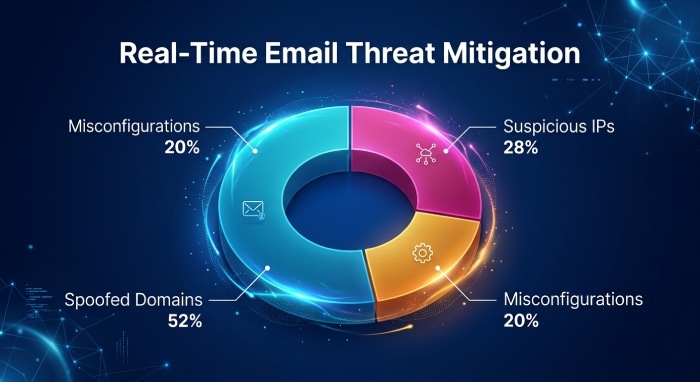
- Detect misconfigurations
- Respond to spoofing attempts quickly
- Move from monitoring to enforcement safely
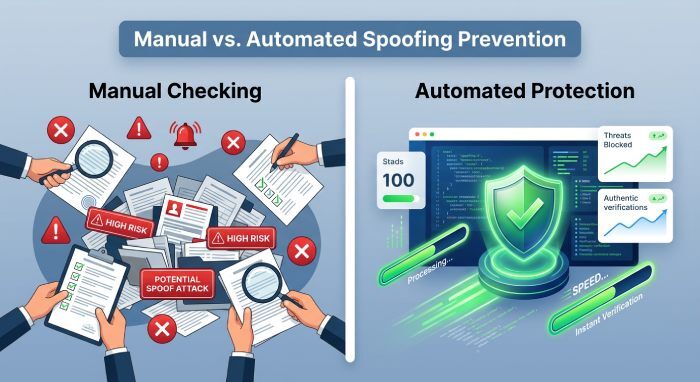
Automated solutions simplify these challenges by continuously analyzing email traffic and authentication results, helping teams maintain strong protection at scale.
Key Features to Look For
When evaluating automated anti-spoofing tools, certain capabilities are especially important:
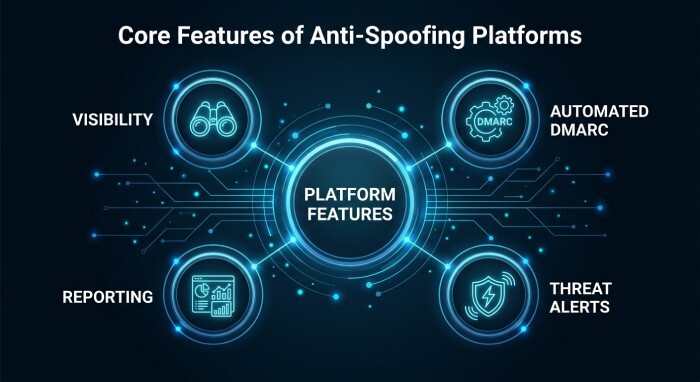
1. Centralized Visibility
A good platform should provide a unified view of all domains, sending sources, and authentication results.
2. Automated SPF, DKIM, and DMARC Management
Look for solutions that simplify record setup, updates, and validation without requiring constant manual intervention.
3. Actionable Reporting
Raw DMARC reports can be difficult to interpret. Effective tools convert them into clear insights and recommendations.
4. Gradual Policy Enforcement
Moving to strict DMARC policies (like quarantine or reject) requires careful planning. Automation helps reduce risks during this transition.
5. Threat Intelligence and Alerts
Real-time detection of spoofing attempts, suspicious IPs, or unauthorized senders is critical.
6. Support for Multiple Domains
Organizations with complex infrastructures need tools that can handle multiple domains and sending services efficiently.
Reality Check Before Choosing a Tool
Before selecting a solution, it’s important to understand that no tool can instantly fix email authentication. Achieving full protection requires:
- Identifying all legitimate email sources
- Aligning SPF and DKIM configurations
- Gradually tightening DMARC policies
Automation accelerates this process, but it still depends on proper setup and ongoing management. Getting the SPF record syntax right is equally important. Generate a signing key with our free DKIM generator to get the DKIM piece in place.
Key Evaluation Criteria
When comparing tools, consider these factors:
- Speed of achieving DMARC enforcement
- Ease of deployment and onboarding
- Accuracy in identifying legitimate vs. unauthorized senders
- Flexibility in handling complex infrastructures
- Ability to minimize false positives
Leading Automated Email Spoofing Prevention Solutions
Below are some widely used platforms designed to combat email spoofing through automation.
1. AutoSPF
AutoSPF is designed to simplify and automate the management of SPF (Sender Policy Framework) records, helping organizations prevent email spoofing while maintaining accurate and optimized DNS configurations. It focuses on reducing the complexity of SPF maintenance, especially for businesses that rely on multiple third-party email services. Knowing the different SPF record variations helps teams understand what the tool optimizes.
Key Highlights:
- Automated SPF record generation and optimization
- Prevention of SPF record errors such as exceeding DNS lookup limits
- Continuous monitoring of authorized sending sources
- Easy integration with existing email infrastructure
- Streamlined updates when adding or removing email services
**Best suited for:
**Organizations that frequently update their email sending services or struggle with managing complex SPF records across multiple platforms.
2. PowerDMARC
This platform focuses on providing a comprehensive view of domain-level email authentication. It consolidates SPF, DKIM, and DMARC data into a single interface, allowing organizations to monitor and manage their domains effectively.
Key Highlights:
- Consolidated reporting for authentication protocols
- Simplified DNS updates and record management
- Visibility into all sending sources
- Support for multi-domain and multi-tenant environments
**Best suited for:**Organizations managing multiple domains or working with external vendors and services.
3. EasyDMAR
Designed for simplicity and accessibility, this solution provides clear dashboards and insights into email authentication status.
Key Highlights:
- User-friendly interface
- Centralized monitoring
- Helpful guidance for improving authentication
**Best suited for:**Small to mid-sized organizations looking for straightforward DMARC management.
4. Red Sift OnDMARC
A platform built with workflow automation and scalability in mind, especially for service providers.
Key Highlights:
- Multi-tenant management
- Automated workflows
- Strong reporting capabilities
**Best suited for:
**Managed service providers handling multiple client domains.
5. Valimail
This solution emphasizes automation in large-scale environments, helping enterprises progress toward strict DMARC enforcement.
Key Highlights:
- Automated discovery of sending services
- Guided enforcement process
- Enterprise-grade scalability
**Best suited for:
**Large organizations with complex email ecosystems.
6. Proofpoint Email Fraud Defens
Focused on brand protection, this tool addresses impersonation and business email compromise threats.
Key Highlights:
- Detection of lookalike domains
- Insights into third-party risks
- Guided implementation support
**Best suited for:
**Enterprises facing frequent impersonation or fraud attempts.
7. Mimecast DMARC Analyzer
This solution provides visibility into email authentication and helps organizations strengthen domain protection.
Key Highlights:
- Real-time monitoring
- Guided setup processes
- Integration with broader security tools
**Best suited for:**Organizations seeking a structured and guided approach to DMARC adoption.
8. Barracuda Email Protection
A broader email security platform that combines threat detection with authentication monitoring.
Key Highlights:
- Integrated phishing protection
- DMARC analysis features
- Unified security environment
**Best suited for:
**Businesses wanting an all-in-one email security solution.
9. Fortra DMARC Protection (Agari)
This platform combines DMARC automation with advanced threat intelligence.
Key Highlights:
- Detection of unauthorized senders
- Advanced analytics
- Enterprise-level protection
**Best suited for:**Organizations needing deep visibility into threats and email ecosystems.
10. Microsoft Defender for Office 365
A built-in solution for Microsoft environments that focuses on inbox-level protection and automated threat response.
Key Highlights:
- Automated detection of phishing and malicious links
- Integration with Microsoft ecosystem
- Incident response capabilities
**Best suited for:**Organizations already using Microsoft 365.
11. DMARC Report
A reporting-focused platform that simplifies DMARC data analysis across multiple domains.
Key Highlights:
- Detailed reporting and exports
- Multi-domain monitoring
- Simplified data interpretation
**Best suited for:**Teams prioritizing reporting and compliance.
How to Choose the Right Solution
Selecting the right tool depends on your organization’s needs:
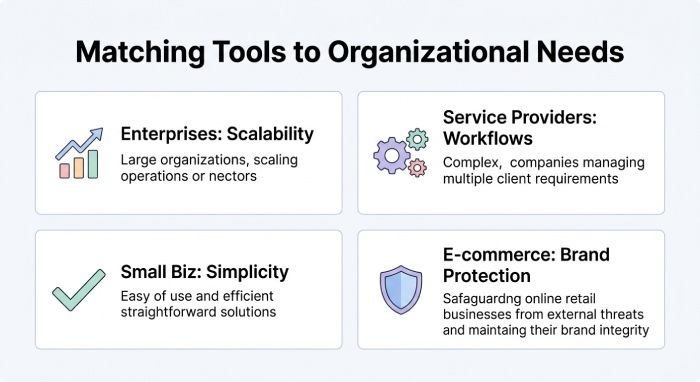
- For multi-domain management: choose platforms with strong visibility and automation
- For enterprise environments: prioritize scalability and guided enforcement
- For brand protection: look for impersonation detection features
- For simplicity: select tools with intuitive dashboards and setup processes
Final Thoughts
Email spoofing remains a serious and persistent threat, but automation has transformed how organizations defend against it. Instead of relying on manual configurations and reactive measures, modern solutions provide continuous monitoring, intelligent insights, and streamlined enforcement.
By implementing the right automated platform and properly configuring authentication protocols, organizations can significantly reduce the risk of spoofing attacks while improving overall email security and trust.
Topics
General Manager
Founder and General Manager of DuoCircle. Product strategy and commercial lead for AutoSPF's 2,000+ customer base.
LinkedIn Profile →