What Is DNS Cache Poisoning and How Can You Prevent It?

Quick Answer
DNS cache poisoning is a cyberattack where hackers corrupt DNS records to redirect users to fake or malicious websites. Prevent it by using DNSSEC, secure networks, updated software, strong authentication, and reliable DNS providers to reduce the risk of phishing, malware, and data theft.
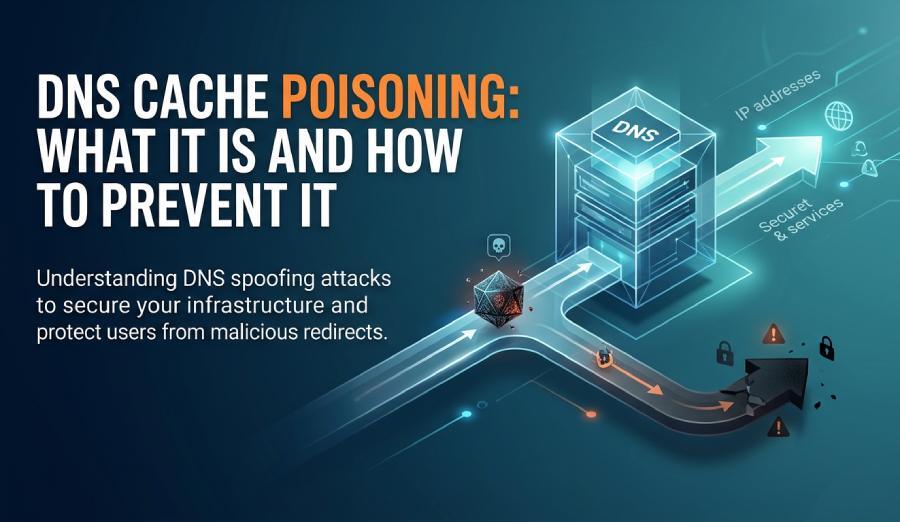
The Domain Name System (DNS) is one of the core technologies that keeps the internet functioning smoothly. Every time you type a website address into your browser, DNS helps connect that domain name to the correct IP address. Without it, users would need to memorize long strings of numbers just to visit websites.
Because DNS plays such a critical role in online communication, it has become a major target for cybercriminals. One dangerous threat aimed at DNS infrastructure is DNS cache poisoning, also called DNS spoofing. This attack manipulates DNS information to redirect users to fraudulent or malicious destinations without their knowledge.
Understanding how DNS cache poisoning works is essential for businesses, website owners, IT teams, and everyday internet users who want to protect their systems and data from online threats.
Understanding DNS Cache Poisoning
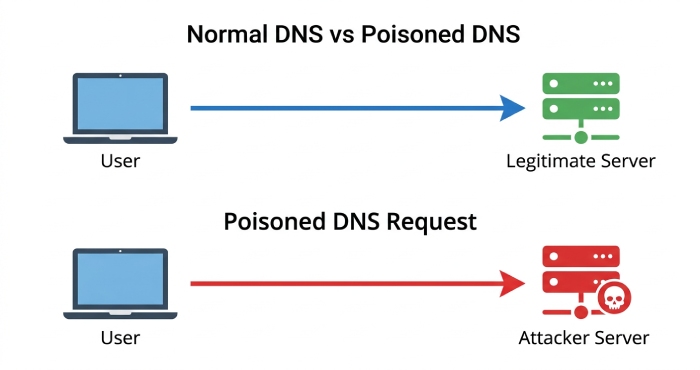
DNS cache poisoning is a cyberattack in which attackers inject fake DNS data into a DNS resolver’s cache. Once the malicious information is stored, users attempting to access a legitimate website may unknowingly be redirected to a fake or attacker-controlled website.
The goal of the attack is usually to steal sensitive information, spread malware, monitor user activity, or impersonate trusted brands and services.
In a normal DNS process, a browser sends a request to a DNS resolver to locate the correct IP address for a domain. The resolver temporarily stores this information in cache memory to speed up future requests. During a cache poisoning attack, false DNS records are inserted into that cache so the resolver delivers fraudulent results instead of legitimate ones.
As a result, users may believe they are visiting a trusted website while actually interacting with a malicious copy created by attackers.
Why DNS Is Vulnerable
DNS was originally designed to prioritize speed and functionality rather than strong security verification. Traditional DNS queries do not always verify whether the returned information is authentic.
This weakness creates opportunities for attackers to exploit DNS communication channels and manipulate cached responses.
Since DNS servers often cache query results to improve browsing performance, a single successful poisoning attempt can impact many users at once until the malicious cache entry expires.
How DNS Resolution Works
To understand cache poisoning, it helps to first understand how DNS normally operates.
When a user enters a domain name into a browser:
- The browser sends a request to a DNS resolver.
- The resolver searches for the corresponding IP address.
- If the information is not already stored in cache memory, the resolver contacts additional DNS servers.
- Once the correct IP address is found, it is returned to the browser.
- The resolver temporarily stores the response in cache for future use.
This caching process improves speed and reduces repeated DNS lookups.
Cached records remain stored for a specific duration known as the Time to Live (TTL). After the TTL expires, the resolver must request updated information again.
How DNS Cache Poisoning Attacks Work
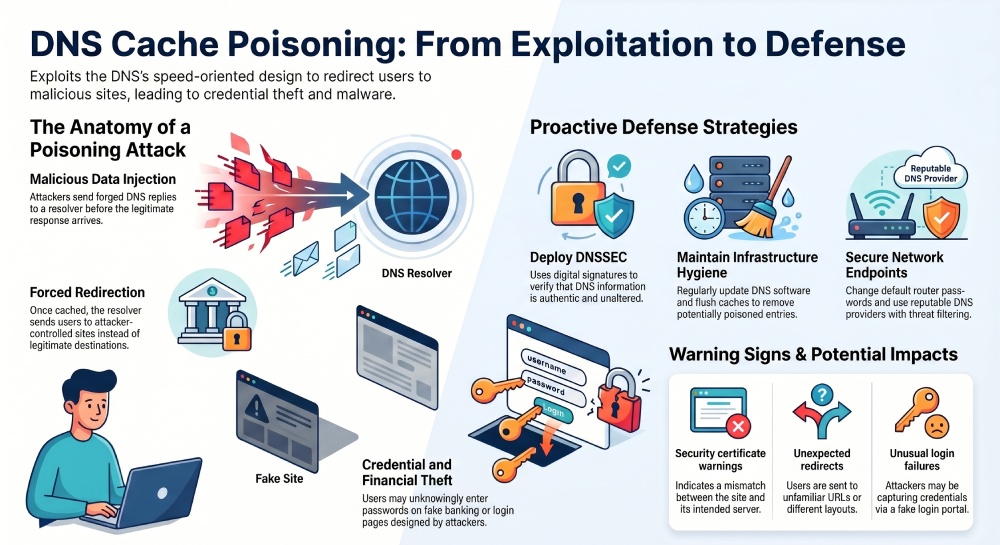
In a DNS cache poisoning attack, cybercriminals attempt to trick a DNS resolver into storing incorrect information.
Attackers may exploit vulnerabilities in DNS software, predictable transaction identifiers, or unsecured DNS communication channels. If the resolver accepts the fake response, it stores the malicious IP address in cache memory.
Once the poisoned entry is cached, users who request the affected domain are redirected to the attacker’s chosen destination.
For example, a user trying to visit a banking website could instead be sent to a fake login page designed to steal usernames, passwords, and financial information.
Because the poisoned record is cached, the fraudulent response can continue affecting multiple users until the cache expires or is manually cleared.
Common Goals of DNS Cache Poisoning
Attackers use DNS spoofing attacks for several malicious purposes, including:
Credential Theft
Fraudulent websites can imitate trusted services to collect usernames, passwords, credit card numbers, and other confidential information.
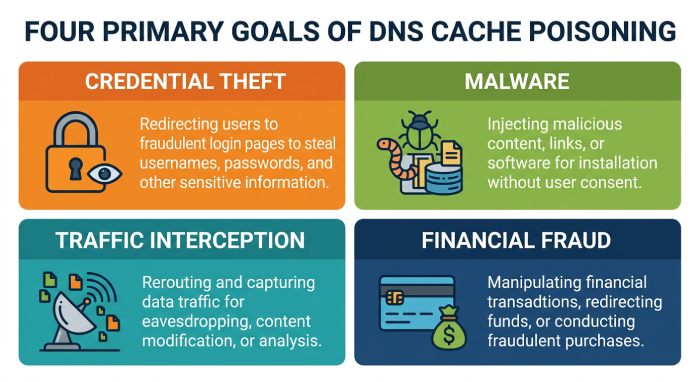
Malware Distribution
Attackers may redirect visitors to websites containing malware, ransomware, spyware, or trojans that infect user devices.
Traffic Interception
DNS spoofing allows cybercriminals to monitor communications and intercept sensitive data transmitted between users and websites.
Brand Impersonation
Hackers often mimic legitimate businesses to deceive customers and damage brand trust.
Financial Fraud
Redirecting users to fake payment portals or banking pages can lead to financial theft and unauthorized transactions.
Signs of a DNS Cache Poisoning Attack
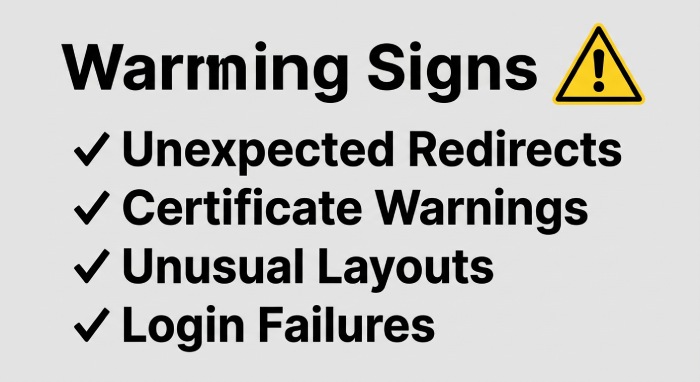
DNS spoofing attacks are often difficult to detect because users may not immediately realize they are visiting a fake website. However, several warning signs may indicate a poisoning attack:
- Unexpected redirects to unfamiliar websites
- Security certificate warnings in the browser
- Slow or unusual website behavior
- Repeated login failures on trusted platforms
- Pop-ups requesting sensitive information
- Different website appearances or layouts
- Increased malware infections across devices
Organizations experiencing these issues should investigate DNS activity immediately.
Risks and Consequences of DNS Cache Poisoning
DNS cache poisoning can have serious consequences for individuals and businesses.
Loss of Sensitive Information
Users may unknowingly provide confidential information to attackers through spoofed websites.
Malware Infections
Malicious redirects can install harmful software capable of stealing data or damaging systems.
Business Reputation Damage
Customers who are redirected to fake versions of a company’s website may lose trust in the organization.
Operational Disruptions
Poisoned DNS records can interfere with online services, causing downtime and interrupting business operations.
Financial Losses
Businesses may suffer financial damage from fraud, legal liabilities, remediation costs, and customer compensation.
Techniques Attackers Use in DNS Spoofing
Cybercriminals use several methods to carry out DNS cache poisoning attacks.

Forged DNS Responses
Attackers send fake DNS replies before legitimate responses arrive, hoping the resolver accepts the malicious answer first.
Exploiting Weak DNS Servers
Outdated or improperly configured DNS infrastructure can contain vulnerabilities that attackers exploit.
Man-in-the-Middle Attacks
Hackers intercept communication between users and DNS servers to alter responses in transit.
Compromised Routers
Infected home or business routers may redirect DNS requests through malicious servers controlled by attackers.
DNS Software Vulnerabilities
Security flaws in DNS applications can create opportunities for unauthorized cache manipulation.
How to Protect Against DNS Cache Poisoning
Preventing DNS cache poisoning requires a combination of security tools, infrastructure updates, and user awareness.
1. Deploy DNSSEC
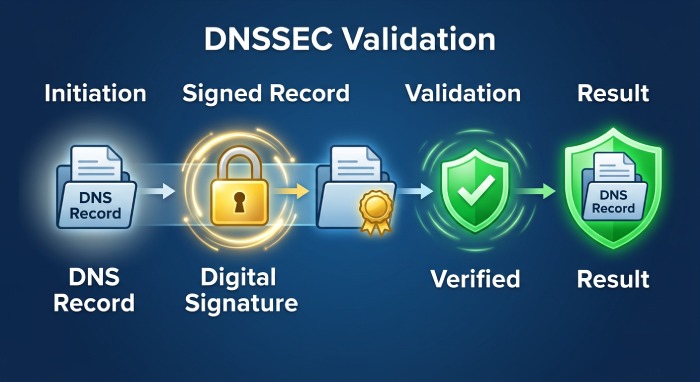
DNS Security Extensions (DNSSEC) add authentication and integrity verification to DNS responses.
DNSSEC uses digital signatures to confirm that DNS information comes from a legitimate source and has not been altered during transmission.
This significantly reduces the risk of forged DNS responses being accepted by resolvers.
2. Keep DNS Software Updated
Outdated DNS servers and network devices may contain known vulnerabilities.
Regular software updates and security patches help close exploitable weaknesses and improve overall protection.
3. Use Secure DNS Resolvers
Trusted DNS providers often implement advanced security measures such as DNS filtering, response validation, and threat intelligence monitoring.
Using reputable DNS services can improve defense against spoofing attacks.
4. Monitor DNS Activity
Continuous DNS monitoring helps identify suspicious traffic patterns, unusual redirects, and unauthorized changes.
Organizations should review DNS logs regularly to detect signs of compromise early.
5. Clear DNS Cache Regularly
Flushing cached DNS records can remove poisoned entries from systems and force devices to retrieve fresh DNS data.
This can help limit the duration of an active poisoning attack.
6. Secure Routers and Network Devices
Default passwords on routers and networking hardware should always be changed.
Administrators should also disable unnecessary remote access features and apply firmware updates regularly.
7. Implement Strong Endpoint Security
Modern antivirus and endpoint protection solutions can help detect malware delivered through malicious redirects.
Security software should always remain updated with the latest threat definitions.
8. Educate Users About Phishing and Fake Websites
Human error remains one of the biggest cybersecurity risks.
Training users to recognize suspicious websites, invalid certificates, and phishing attempts can reduce the success rate of DNS spoofing attacks.
DNSSEC and Its Role in DNS Security
DNSSEC is widely considered one of the most effective protections against cache poisoning.
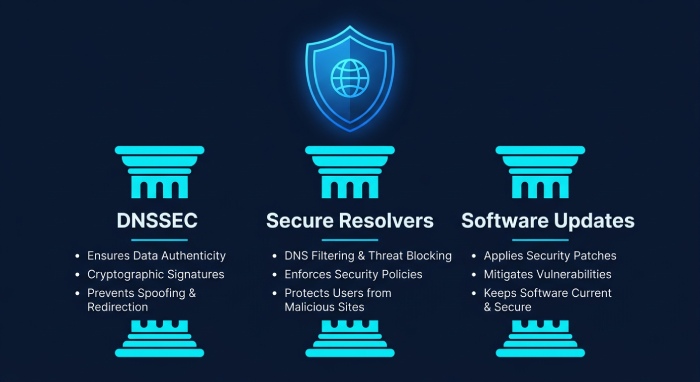 It works by attaching cryptographic signatures to DNS records. DNS resolvers can then verify whether the received data is authentic.
If the signature validation fails, the resolver rejects the response instead of caching potentially malicious information.
Although DNSSEC does not encrypt DNS traffic, it helps ensure the integrity and authenticity of DNS responses.
The Importance of Proactive DNS Security
DNS attacks continue to evolve as cybercriminals develop more sophisticated methods for manipulating internet traffic.
Businesses should treat DNS security as a critical component of their overall cybersecurity strategy rather than a secondary concern.
Regular audits, infrastructure monitoring, strong authentication practices, and secure DNS configurations can greatly reduce exposure to DNS-related threats.
Organizations that rely heavily on online services, email systems, cloud applications, and customer-facing websites should pay particular attention to DNS protection. For email specifically, review SPF flattening pricing to keep authentication affordable and reliable.
Final Thoughts
DNS cache poisoning is a dangerous cyber threat capable of redirecting users to malicious websites, stealing sensitive information, spreading malware, and damaging business reputation.
 Because DNS is such an essential part of internet communication, even a single successful poisoning attack can impact large numbers of users.
Protecting against these attacks requires a layered security approach that includes DNSSEC deployment, secure DNS infrastructure, regular software updates, endpoint protection, and ongoing security awareness.
By strengthening DNS defenses and maintaining proactive monitoring practices, organizations and individuals can significantly reduce the risks associated with DNS cache poisoning and maintain safer online experiences.
Implementing SPF with tools like AutoSPF alongside DMARC and DKIM helps reduce domain spoofing and strengthen protection against phishing and DNS-based attacks. Keeping that SPF record lean with an SPF flattening service ensures it never breaks under the 10-lookup limit. See our frequently asked questions for more on keeping SPF healthy.
General Manager
General Manager of DuoCircle. Product strategy and commercial lead for AutoSPF's 2,000+ customer base.
LinkedIn Profile →