Spam Blockers and SPF: How Email Authentication Helps Stop Spam and Spoofing

Quick Answer
SPF helps prevent email spoofing by verifying authorized sending servers, while spam blockers filter unwanted or malicious messages. Using SPF with DKIM and DMARC provides layered protection against spam, phishing, spoofing, and other email threats.
Email spam, phishing, spoofing, spam calls, robocalls, and unwanted SMS all exploit the same weakness: people and systems often trust a sender before verifying identity. In email, Sender Policy Framework (SPF) helps confirm whether a server is authorized to send mail for a domain. In mobile environments, tools such as a call blocker, sms blocking, reverse phone lookup, and options to block hidden numbers help reduce unwanted interruptions. Together, these layers create stronger spam protection across inboxes and phones.
Modern anti-abuse strategy is no longer just about deleting junk. It is about combining authentication, filtering, reporting, privacy protection, and user controls to block spam before it reaches the user.
What Spam Removers Do: Filtering, Blocking, and Cleaning Unwanted Email
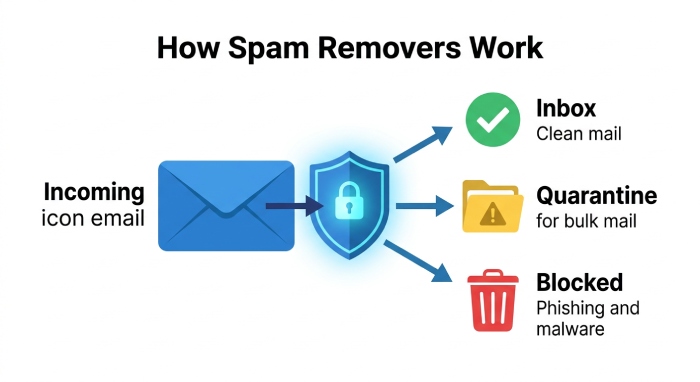
Spam removers are software tools or security features designed to detect, quarantine, delete, or label unwanted email. They analyze message headers, sender reputation, URLs, attachments, language patterns, and user behavior to block spam more accurately. Some spam removers are built into email platforms, while others are standalone products used by businesses for gateway-level filtering.
A good spam remover can:
- Filter suspicious messages before they hit the inbox
- Block spam from known malicious domains or IP addresses
- Move bulk marketing messages into quarantine
- Detect phishing links and malware attachments
- Allow users to report spam for future detection improvements
- Maintain a custom blacklist and whitelist for trusted or blocked senders
 This mirrors how mobile spam protection tools help users manage unwanted calls and messages. A call-blocking solution can identify and block suspicious numbers, support reverse phone lookups, filter unwanted calls, and use SMS blocking to reduce text-based fraud attempts. These features work together to provide better protection against spam, robocalls, and potentially fraudulent messages while improving the overall mobile experience.
The same principle applies to email: spam removers do not merely clean up the mess; they help prevent future abuse. However, filtering alone cannot prove whether a sender is legitimate. That is where SPF becomes important.
Understanding SPF: How Sender Policy Framework Verifies Legitimate Senders
SPF, or Sender Policy Framework, is an email authentication protocol that allows a domain owner to publish a list of approved mail servers in DNS. When a receiving mail server gets a message, it checks the SPF record to determine whether the sending server is authorized to send on behalf of that domain.
For example, if a company sends newsletters or event invitations through a third-party email service, its SPF record may need to authorize those sending servers. If the server is not included in the SPF record, receiving systems may view the message as suspicious or reject it.
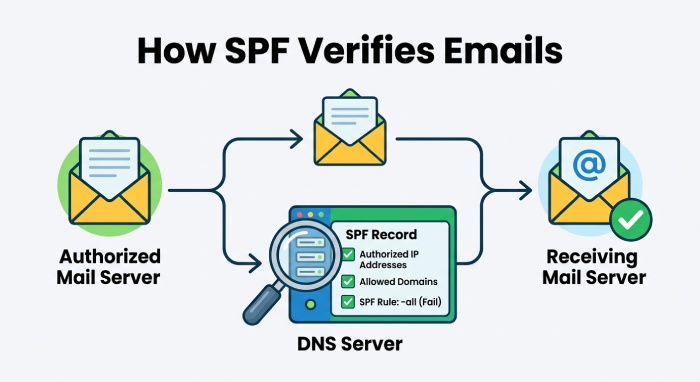 SPF is a foundational part of email security because it reduces the ability of attackers to impersonate trusted domains. It does not directly block spam on its own, but it gives filters a reliable identity signal. Spam removers can then combine SPF results with content analysis, sender reputation, and user feedback to decide whether to block spam, quarantine it, or deliver it.
This identity verification is similar to reverse phone lookup in mobile security. Just as reverse phone lookup helps identify unknown callers or unknown numbers, SPF helps identify whether an email server is legitimately connected to the domain it claims to represent.
How SPF Helps Stop Spoofing, Phishing, and Fake Sender Addresses
Email spoofing happens when an attacker forges the “From” address to make a message appear as if it came from a trusted brand, executive, vendor, or colleague. SPF helps stop this by allowing receiving servers to check whether the sender is authorized.
When SPF fails, spam removers can treat the message with suspicion. This is especially important for phishing campaigns that attempt to steal personal information, passwords, financial data, or business credentials. SPF also supports better data privacy and privacy protection because users are less likely to interact with fraudulent messages that impersonate trusted organizations.
SPF is not perfect. It checks the envelope sender rather than always validating the visible “From” address users see. Forwarded email can also create complications. Still, SPF provides a valuable signal that helps block spam, especially when combined with DKIM and DMARC.
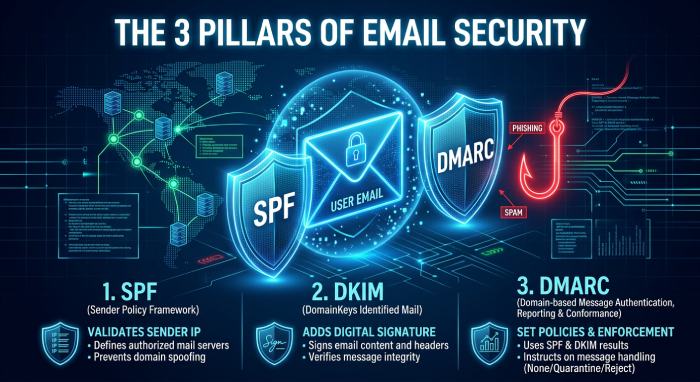 SPF works best as part of a broader email security strategy. While SPF helps receiving servers determine whether a sending server is authorised to send email for a domain, it does not evaluate the content or intent of every message. Combining SPF with DKIM, DMARC, sender reputation, URL scanning, attachment analysis, and spam filtering gives organisations stronger protection against spoofing, phishing, and unwanted email.
Consumers in the United States can report unwanted calls to the appropriate authorities and add their phone numbers to the National Do Not Call Registry. These resources provide guidance on robocalls, spam calls, and common phone scams. Although they address phone-related abuse rather than email authentication, they highlight the importance of verification, reporting, and enforcement in reducing unwanted communications.
SPF vs. Spam Blockers: Why Email Authentication and Filtering Work Better Together
SPF and spam removers solve different problems. SPF verifies whether a server is authorized to send email for a domain. Spam removers evaluate whether the message appears unwanted, malicious, or fraudulent. One confirms identity; the other evaluates risk.
A message can pass SPF and still be spam. For example, a legitimate email service can be abused by a malicious customer. Similarly, a phone number may appear valid in reverse phone lookup but still generate annoying calls. That is why spam protection requires layered controls.
A mature defense combines:
- SPF authentication
- DKIM cryptographic signatures
- DMARC policy enforcement
- URL and attachment scanning
- Behavioral analysis
- Sender reputation
- User report spam feedback
- Quarantine and notification workflows
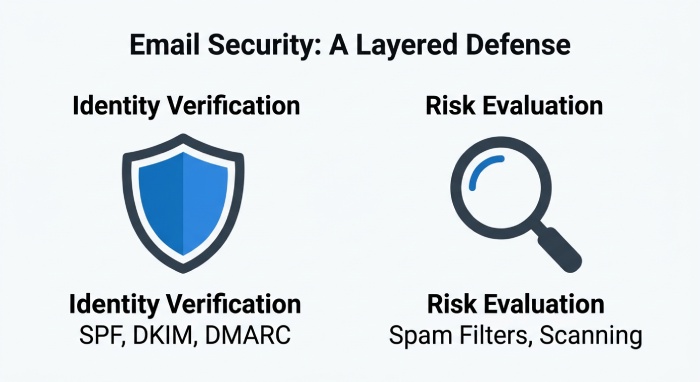 The same layered approach applies to email security. Spam filters can identify suspicious messages based on content, sender reputation, URLs, and attachments, while SPF verifies whether the sending server is authorised to send email for a domain. When SPF is combined with DKIM and DMARC, organisations can strengthen protection against spoofing, phishing, and other email-based threats.
For Android users, app marketplaces may provide useful information such as App Reviews, Data Safety, privacy policies, App Support, Customer Support, Developer details, and app permissions. Users should read reviews, check the app’s update history, review its data protection practices, and understand whether it offers an ad-free experience, premium features, or a subscription. This is especially important when a call blocker requests access to contacts, call history, or notification permissions.
Best Practices for Using Spam Removers with SPF, DKIM, and DMARC
Spam removers work best when email authentication is correctly configured. SPF alone is helpful, but SPF with DKIM and DMARC provides much stronger protection from spam, spoofing, and phishing.
Publish Accurate SPF Records
Keep SPF records simple, current, and aligned with real sending sources. Include only authorized mail platforms, remove obsolete services, and avoid excessive DNS lookups. If your organization uses multiple vendors, document each sending source so legitimate email is not mistakenly blocked.
This is similar to maintaining a clean whitelist or custom blacklist in a call blocker. If your blocklist is outdated, you may block wanted communication. If your whitelist is too broad, you may allow unwanted messages. Good hygiene helps block spam without disrupting legitimate communication.
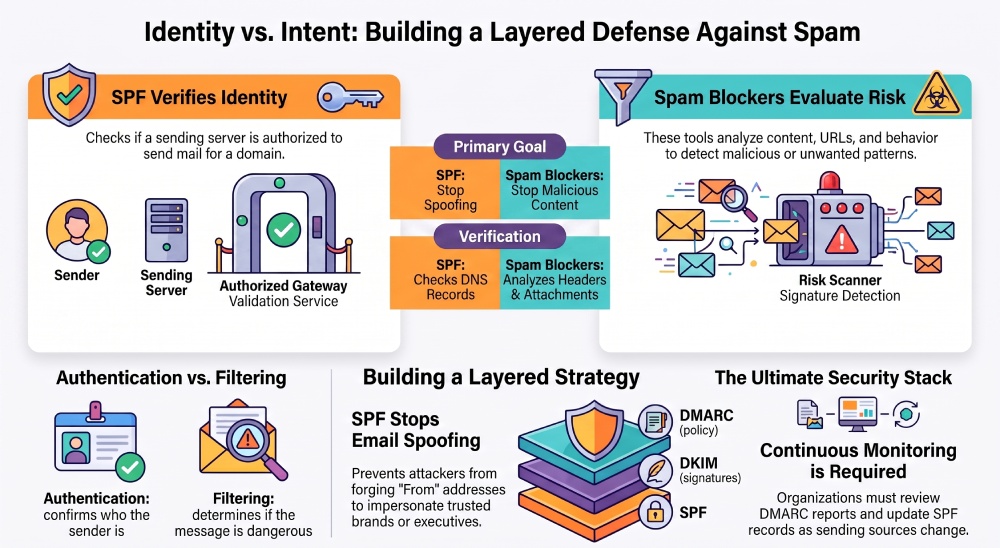
Pair SPF with DKIM and DMARC
DKIM adds a cryptographic signature to email, helping prove the message was not altered in transit. DMARC tells receiving servers what to do when SPF or DKIM checks fail. A strong DMARC policy can instruct receivers to quarantine or reject unauthenticated mail.
This layered approach resembles mobile spam protection systems that combine call filtering, number blocking, reverse phone lookup, sms blocking, and spam alerts. No single control can block unwanted calls, stop robocalls, block hidden numbers, and identify unknown callers perfectly. But together, they provide stronger protection from spam.
Monitor Reports, Users, and Policy Changes
Review DMARC aggregate reports, spam remover logs, quarantine trends, and user submissions. Encourage employees to report spam rather than simply delete suspicious messages. Monitor false positives, especially when rolling out stricter DMARC policies.
The same operational discipline applies to mobile security. Users should check notification settings, update their call blocker, review app permissions, and use user support when blocking mistakes occur. Businesses managing devices should define policies for sms blocking, block numbers rules, unknown callers, unknown numbers, and how to block hidden numbers without harming legitimate contacts.
Spam removers, SPF, DKIM, DMARC, and mobile tools such as call blocker apps all serve one broader purpose: reducing deception. Whether the threat arrives as spoofed email, spam calls, robocalls, or malicious texts, layered spam protection gives users better control, stronger privacy protection, and a safer communication environment.
General Manager
Founder and General Manager of DuoCircle. Product strategy and commercial lead for AutoSPF's 2,000+ customer base.
LinkedIn Profile →