How does Privileged Account and Session Management (PASM) help strengthen DMARC and email security?

Quick Answer
The truth is that the most important people in your organization are also the most targeted individuals for cyber-attacks due to their access to the most critical information and the management of sensitive systems that are major targets for cyber-attackers.
Try Our Free DMARC Checker
Validate your DMARC policy, check alignment settings, and verify reporting configuration.
Check DMARC Record →
The truth is that the most important people in your organization are also the most targeted individuals for cyber-attacks due to their access to the most critical information and the management of sensitive systems that are major targets for cyber-attackers.
DMARC (RFC 7489) ties SPF and DKIM together by requiring alignment between the envelope sender and the visible From header. According to Google’s February 2024 bulk sender requirements, a DMARC policy of at least p=none is now mandatory for any domain sending 5,000+ messages per day to Gmail users.
Since these accounts are the key to your organization’s most valuable resources, it only makes sense to protect them with all your might. Because if these accounts are compromised, attackers can get unrestricted access to your critical systems and mess them up terribly.
Speaking of critical systems and their security, as you know, DMARC protects your email ecosystem by preventing attackers from sending fake emails using your domain. But what if someone takes hold of your privileged accounts and makes a complete mess out of your DMARC policy? That means you have to find a way to secure the accounts that manage and control DMARC settings.
This is where Privileged Account and Session Management (PASM) comes into play! You can think of PASM as a security system for your most important accounts - like admin accounts, which are basically the ones that govern your organization’s critical settings and systems. It safeguards only those authorized personnel who access these accounts, secures login information, and tracks every activity happening in these accounts.
In this article, we will take a look at how Privileged Account and Session Management (PASM) works in tandem with DMARC to secure your privileged accounts and, ultimately, your email ecosystem.
What is PASM?
Privileged Account and Session Management, or PASM, is your safety system for the most important accounts - you know, those that have a right to control critical parts of the organization, like settings for DMARC and other sensitive systems. PASM will ensure that only trusted individuals access these accounts, secure their passwords, and log what happens when someone uses those accounts. In doing so, PASM ensures that hackers or unauthorized users do not mess with important settings, keeping everything safe and working as it should.
How does PASM support DMARC implementation?
It is clear that you need a security strategy to safeguard the sensitive accounts and systems involved in the implementation and management of important operations like DMARC. And when it comes to protecting privileged access and ensuring controlled management, Privileged Account and Session Management (PASM) fits the bill!
It is especially useful for accounts that underpin DMARC implementation. Let us take a look at the ways in which PASM supports DMARC implementation.
Safeguarding your DNS configuration
If an attacker gets access to your DNS settings, they can disrupt your entire email authentication deployment and potentially compromise your organization’s email security. They can do this by manipulating DMARC, SPF, or DKIM records to allow malicious accounts to send emails on your behalf, leading to phishing and other fraudulent activities.
With PASM, you can enforce strong access controls, including multi-factor authentication (MFA) and password vaulting, for privileged DNS accounts. This will allow only authorized users to make changes to the DNS and keep an eye out for any suspicious activities.
Protecting access to email servers
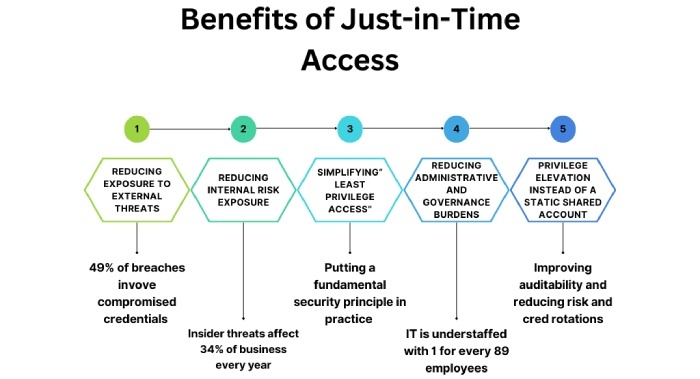
Your email servers are basically the core elements of the implementation of SPF and DKIM, and if someone messes up with them, that would undermine the effectiveness of DMARC. Even a routine change like exceeding the SPF lookup limit can quietly break authentication. To avoid this, you can use PASM tools that limit access to email server configurations by using just-in-time access and rotating credentials. This reduces the exposure of keys or unauthorized changes.
Analyzing DMARC reports
You might already know that DMARC reports are just as important as DMARC enforcement, if not more. But what if a threat actor bypasses a privileged account to access DMARC reports? They could exploit these insights to refine their phishing tactics or spoof legitimate emails more effectively. However, with PASM, you can enforce role-based access, which ensures that only authorized users can view these reports.
Mitigate insider threats
Even the slightest accidental error or internal misuse can jeopardize DMARC implementation by weakening DMARC policies. For instance, if someone implements enforcement to “none” instead of “reject,” it can leave your domain vulnerable and give way to spoofing and phishing attacks. The same care applies to editing a sample SPF record - a single wrong mechanism weakens the whole policy.
PASM mitigates these risks by enforcing strict, role-based access, along with real-time monitoring and comprehensive audit trails for all privileged activities. This not only deters malicious intent but also helps organizations quickly identify and correct errors, thus ensuring integrity in the implementation of DMARC.

Since DMARC is one of the most effective ways to ward off email-based cyber threats, it is important that you protect the systems and accounts that oversee its implementation. As standards evolve, keeping an eye on the future of SPF helps you plan ahead. If cyber attackers get hold of these privileged accounts, the kind of chaos and damage they will cause is unfathomable. But the good news is that now you can employ a dedicated strategic approach to protect these accounts and ultimately ensure effective DMARC implementation.
Topics
General Manager
General Manager of DuoCircle. Product strategy and commercial lead for AutoSPF's 2,000+ customer base.
LinkedIn Profile →