PCI Domains and PCI DSS 4.0.1: Email Authentication Best Practices for Hospitality

Quick Answer
PCI DSS 4.0.1 requires hospitality businesses to strengthen security around payment data. Learn how email authentication protocols like SPF, DKIM, and DMARC help protect PCI domains from phishing, spoofing, and email-based threats while supporting stronger security practices.
In hospitality, PCI domains can be used as a descriptive phrase for the email domains, systems, and network environments involved in payment security and PCI DSS compliance. However, it is not an official term defined by the PCI Security Standards Council. For hotels, resorts, restaurants, casinos, booking platforms, and travel brands, understanding how email systems interact with payment environments helps organizations identify security risks and assess PCI DSS scope.
Under the payment card industry framework, PCI DSS applies wherever cardholder data is stored, processed, or transmitted. Even if email is not intended to carry payment details, it can affect PCI compliance when it connects to reservation platforms, payment gateways, call-center tools, invoice workflows, or vendor portals. A compromised email account can expose guest data, redirect deposits, approve fraudulent refunds, or give attackers a route into the internal network.
Email domains can influence PCI scope
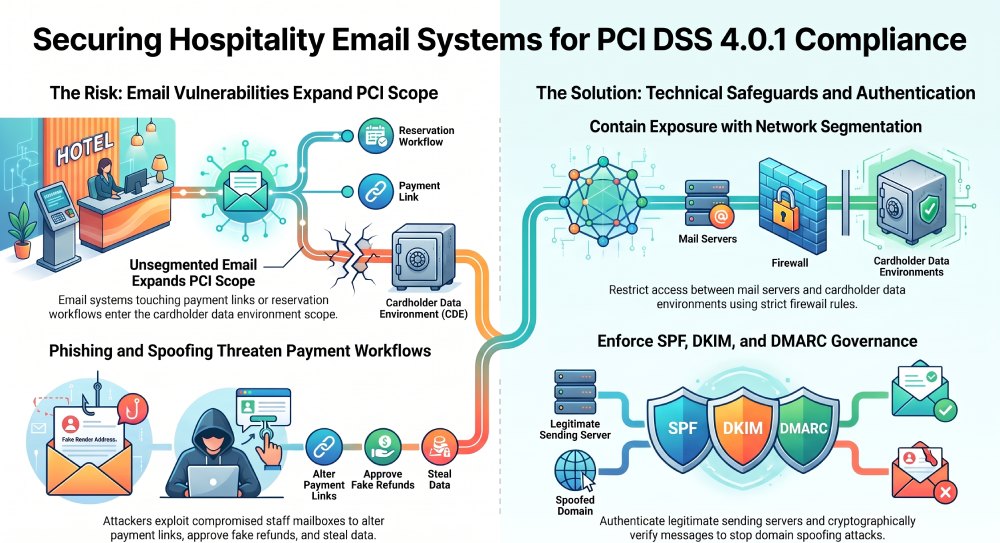
Hospitality organizations should treat email infrastructure as part of the broader PCI scope analysis. If email systems can access booking records, payment links, refund approvals, or documents containing credit card data flow, they may be connected to the card data environment (CDE). Strong network segmentation, clear access control, and documented limits of PCI scope help prevent email compromise from expanding the PCI audit scope.
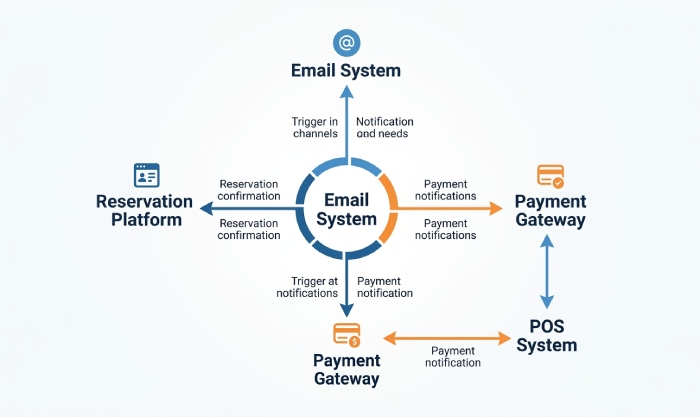
A practical approach starts with data flow diagrams, a current system inventory, and a risk assessment of how email interacts with point-of-sale systems, reservation systems, loyalty platforms, and payment processor portals. This supports scope reduction, stronger PCI segmentation controls, and better PCI documentation for a QSA (Qualified Security Assessor), SAQ (Self-Assessment Questionnaire), or formal PCI audit.
Why PCI DSS 4.0.1 Matters for Hotels, Resorts, Restaurants, and Travel Brands
PCI DSS 4.0.1 raises expectations for security maturity
PCI DSS 4.0.1, maintained by the PCI Security Standards Council, reflects the modern threat landscape facing the payment card industry. The standard emphasizes continuous security, stronger authentication, targeted risk assessment, and evidence-based compliance validation. For hospitality brands that depend on credit card processing, merchant account relationships, and guest trust, PCI compliance is not merely a checklist”it is a business requirement tied to revenue continuity.
Card brands and acquirers such as Visa, Mastercard, American Express, Discover, and JCB expect merchants to follow applicable PCI requirements. Acquirers and processors including Chase Paymentech, First Data, Worldpay, Elavon, Fiserv, Global Payments, and Heartland Payment Systems may require compliance reporting, remediation updates, or proof that non-compliant systems are not affecting payment processing.
PCI compliance depends on operational controls, not policy alone
Hotels and restaurants often rely on third-party payment providers, property management systems, reservation platforms, and outsourced IT services. When outsourcing payment-related functions, hospitality organizations should understand each providers security responsibilities, applicable PCI DSS requirements, and how integrations may affect the scope of their compliance obligations.
Effective PCI compliance requires documented security policies, security awareness training, incident response, vulnerability management, and an enforceable compliance checklist. It also requires technical safeguards such as multi-factor authentication, encryption, log monitoring, intrusion detection, vulnerability scanning, and penetration testing. Providers such as Trustwave, ControlScan, Qualys, Coalfire, Tenable, Rapid7, SecurityMetrics, and Sysnet Global Solutions commonly support PCI programs, ASV (Approved Scanning Vendor) scans, and security testing.
Mapping Email Systems to the Cardholder Data Environment and Connected PCI Domains
Identify how email touches payment workflows
The first step is to map how email supports the hospitality business environment. Reservation confirmations, group sales contracts, banquet event orders, folio disputes, chargeback responses, payment links, and vendor invoices may all intersect with payment processing. If staff email accounts can access systems containing cardholder data, initiate refunds, or approve payment changes, the email environment affects PCI scope.
Organizations should review network architecture, identity platforms, mail gateways, cloud collaboration tools, and integrations with property management systems. For cloud PCI compliance, this includes services hosted in Amazon Web Services or Microsoft Azure, as well as email security platforms from vendors such as Cisco, Fortinet, Palo Alto Networks, McAfee, Symantec, FireEye, and IBM Security.
Use segmentation to contain exposure
A secure network is essential for keeping email compromise away from the CDE. Hospitality IT teams should use network segmentation, WAN/LAN segmentation, restrictive firewall configurations, and role-based access control to isolate mail systems from payment networks. Where segmentation is relied upon for PCI scope reduction, PCI segmentation testing should validate that email users cannot reach restricted systems unless explicitly authorized.
Common Hospitality Email Risks: Phishing, Booking Fraud, Vendor Spoofing, and Guest Data Exposure
Phishing can bypass weak access control
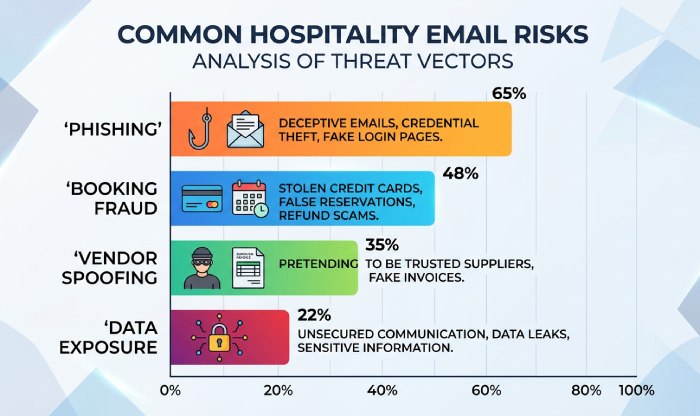
Hospitality brands are prime targets for phishing because employees handle guest requests, refunds, event deposits, and urgent supplier messages. A single compromised mailbox can create a false audit trail, expose cardholder data, or lead to a data breach. Attackers may search email archives for payment forms, old authorization slips, passport scans, or messages containing sensitive authentication data that should never have been retained.
Strong access control, multi-factor authentication, encryption, and log monitoring reduce this risk. However, security awareness training is equally important because front-desk teams, reservations staff, and restaurant managers are frequent targets. If a suspicious email leads to a security incident, the organizations incident response process should preserve evidence, disable compromised accounts, review the audit trail, and determine whether PCI enforcement or card-brand notification obligations apply.
Booking fraud and vendor spoofing affect payment processing
Attackers often impersonate travel agents, online travel agencies, linen suppliers, food distributors, or corporate customers. Vendor spoofing can redirect wire payments, while booking fraud can manipulate deposits through a merchant account or fake payment pages. Fraudulent links may imitate trusted payment gateways or redirect guests away from secure payment processing workflows.
Hotels and restaurants should monitor for lookalike domains, unauthorized email senders, and brand impersonation. SPF, DKIM, and DMARC can help authenticate legitimate email and reduce domain spoofing risks. These controls should complement access restrictions, incident response procedures, and regular reviews of systems connected to payment environments to support effective email security and PCI DSS scope management.
Core Email Authentication Controls: SPF, DKIM, and DMARC Explained
SPF, DKIM, and DMARC protect trusted sending domains
Email authentication is not a direct substitute for PCI DSS controls, but it strengthens the secure network and supports PCI compliance by reducing phishing and spoofing risk. SPF identifies which mail servers can send on behalf of a domain. DKIM uses a cryptographic signature to help receiving mail servers verify that a message was authorized by a signing domain and that signed message content has not been altered in transit. DKIM does not encrypt the email itself.
DMARC checks whether a message passes SPF or DKIM with alignment to the domain shown in the visible From address. It allows domain owners to publish policies for handling messages that fail DMARC checks and receive reports that help identify authentication failures and unauthorized senders.
For hospitality, DMARC is especially valuable because brands send email from many systems: booking engines, loyalty platforms, marketing automation, guest messaging tools, payment gateways, and third-party service providers. Without governance, these systems create shadow senders that complicate PCI documentation, weaken security policies, and increase PCI risk.
Align email authentication with PCI DSS 4.0.1 governance
A practical deployment begins with discovery. Inventory all sending sources, including corporate email, franchise domains, restaurant platforms, spa systems, event systems, and payment-related applications. Then align authorized senders with the merchant account, payment processor, and approved vendors. This supports cleaner compliance reporting, better compliance validation, and stronger evidence for PCI DSS reviews.
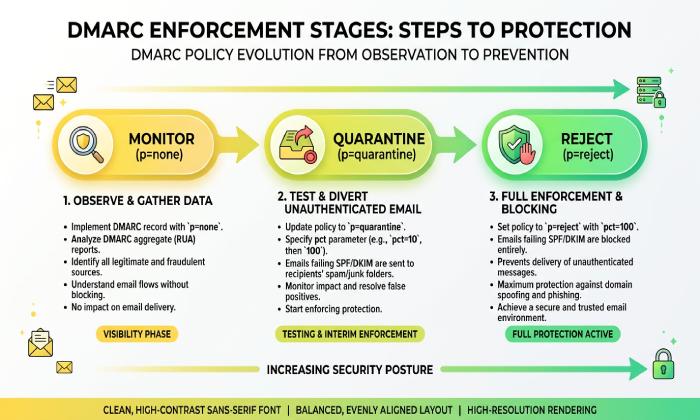
Hospitality organizations should move DMARC gradually from monitoring to quarantine and then reject, while preserving business-critical email flows. During rollout, teams should review reports, update SPF records, rotate DKIM keys, confirm domain alignment, and monitor failures. These activities should be incorporated into vulnerability management, security testing, and routine PCI compliance operations. Effective email security helps protect sensitive information and prevent phishing attacks, email spoofing, and data breaches.
General Manager
General Manager of DuoCircle. Product strategy and commercial lead for AutoSPF's 2,000+ customer base.
LinkedIn Profile →